Do you want to know how to sell a logistics business? Whether you own a trucking company, freight brokerage, transportation company, warehousing operation, or third-party logistics (3PL) business, preparing your company before going to market can have a significant impact on the value you receive. Discover key steps that the strongest sellers take to ensure success, including:
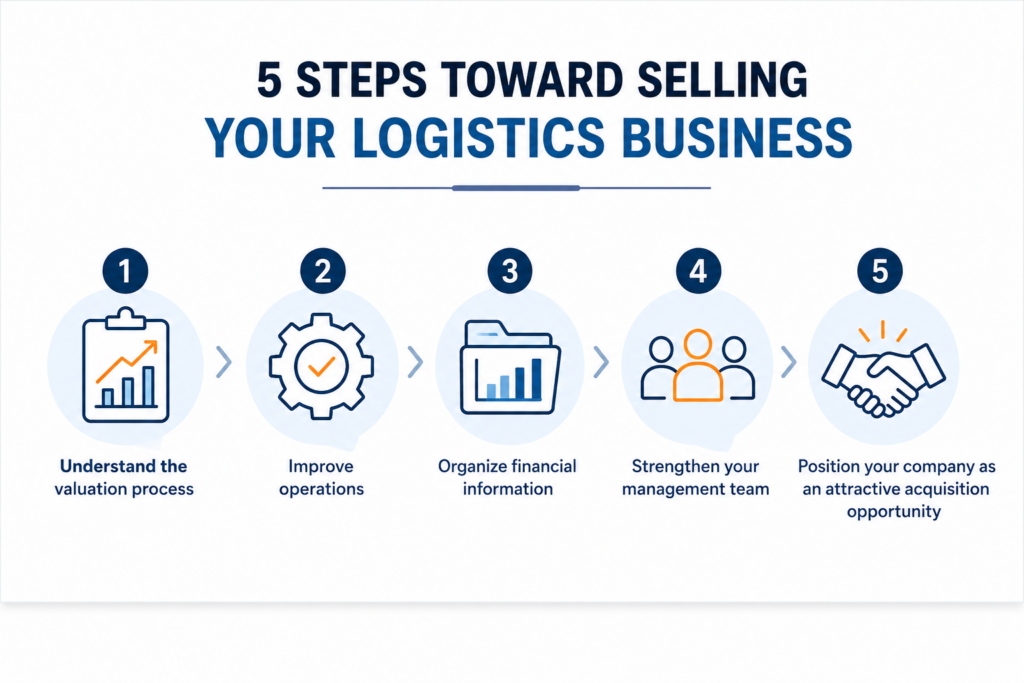
- Understand the valuation process
- Improve operations
- Organize financial information
- Strengthen their management team
- Position their company as an attractive acquisition opportunity
1. Understand the Logistics Business Valuation Process
The first step in selling a logistics company is understanding what your business is worth. A professional logistics business valuation helps determine a realistic market value and provides insight into what buyers may consider when evaluating an acquisition.
Buyers typically look at profitability, cash flow, customer relationships, operational efficiency, and future growth potential. When determining the value of your business, the following factors are considered:
- Revenue and profitability trends
- EBITDA and cash flow performance
- Customer retention and contracts
- Fleet and equipment value
- Management structure
- Operational systems
- Growth opportunities
Understanding your company’s value early allows you to identify areas that may need improvement before entering the market. A stronger, well-prepared business is more likely to attract serious buyers and achieve better results during negotiations.
2. Improve Operations Before Selling a Logistics Company
Knowing how to prepare a logistics company for sale means taking steps to improve the business before buyers begin their review. Buyers are looking for companies that are efficient, organized, and positioned for continued success after ownership changes.
Improving operations may include reviewing internal processes, reducing unnecessary expenses, improving customer service, and creating systems that make the company easier to operate.
Important areas to focus on include:
- Documenting procedures and workflows
- Improving operational efficiency
- Maintaining equipment and asset records
- Reviewing vendor relationships
- Creating scalable processes
A logistics company that runs smoothly and has established systems is often more attractive to buyers because it reduces transition challenges after the sale.
3. Organize Financial Information
Accurate and organized financial records are one of the most important parts of preparing a logistics business for sale. Buyers need confidence that they understand the company’s performance, profitability, and future potential.
Before selling, owners should prepare important documents such as:
- Profit and loss statements
- Tax returns
- Balance sheets
- Customer revenue reports
- Expense records
- Equipment and asset information
Strong financial documentation helps support the logistics business valuation and makes the due diligence process easier. Buyers are more comfortable moving forward when they can clearly review the company’s financial history.
4. Strengthen Your Management Team
Many logistics businesses are built around the owner’s knowledge, relationships, and daily involvement. While this experience is valuable, heavy owner dependency can make buyers question how the company will perform after the transition.
Strengthening your management team can increase buyer confidence by showing that the business can continue operating successfully without relying entirely on the owner.
Consider:
- Training key employees
- Delegating daily responsibilities
- Developing leadership roles
- Creating clear operating procedures
A strong management team demonstrates that the company has long-term stability and growth potential.
5. Position Your Logistics Company as an Attractive Acquisition Opportunity
Successfully selling a logistics company requires more than simply listing the business for sale. Buyers are looking for opportunities that provide value, stability, and future growth.
Companies that stand out often have:
- Consistent revenue
- Strong customer relationships
- Efficient operations
- Experienced employees
- Clear growth opportunities
Working with an experienced logistics business broker can also help position your company properly in the marketplace. A specialized broker understands what buyers are looking for, helps maintain confidentiality, and connects sellers with qualified acquisition opportunities.
Why Hire a Logistics Business Broker When Selling Your Company?
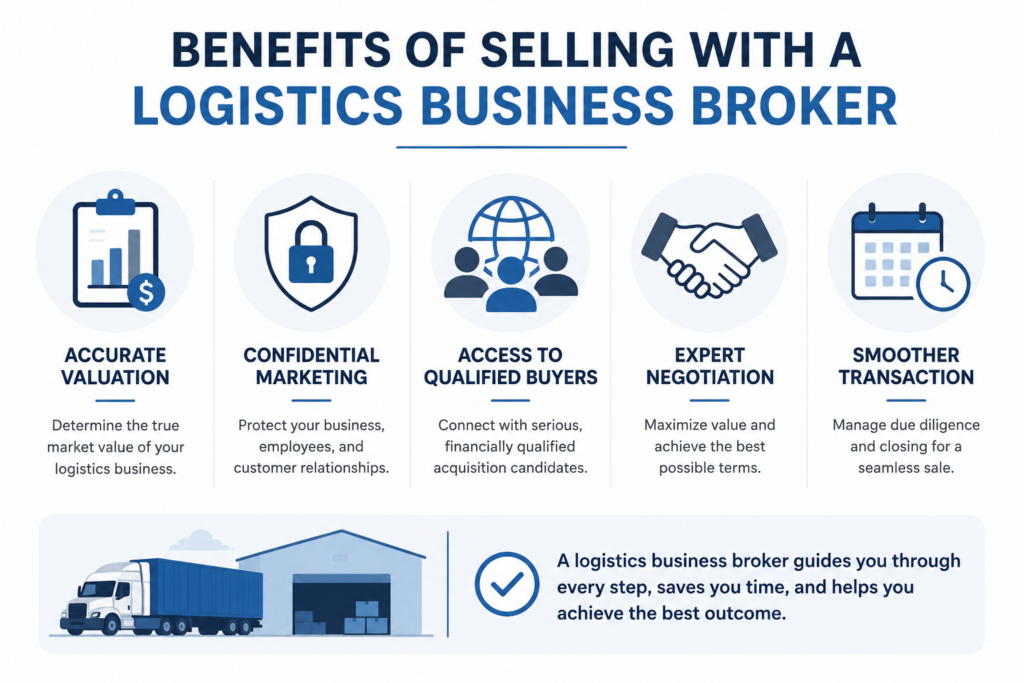
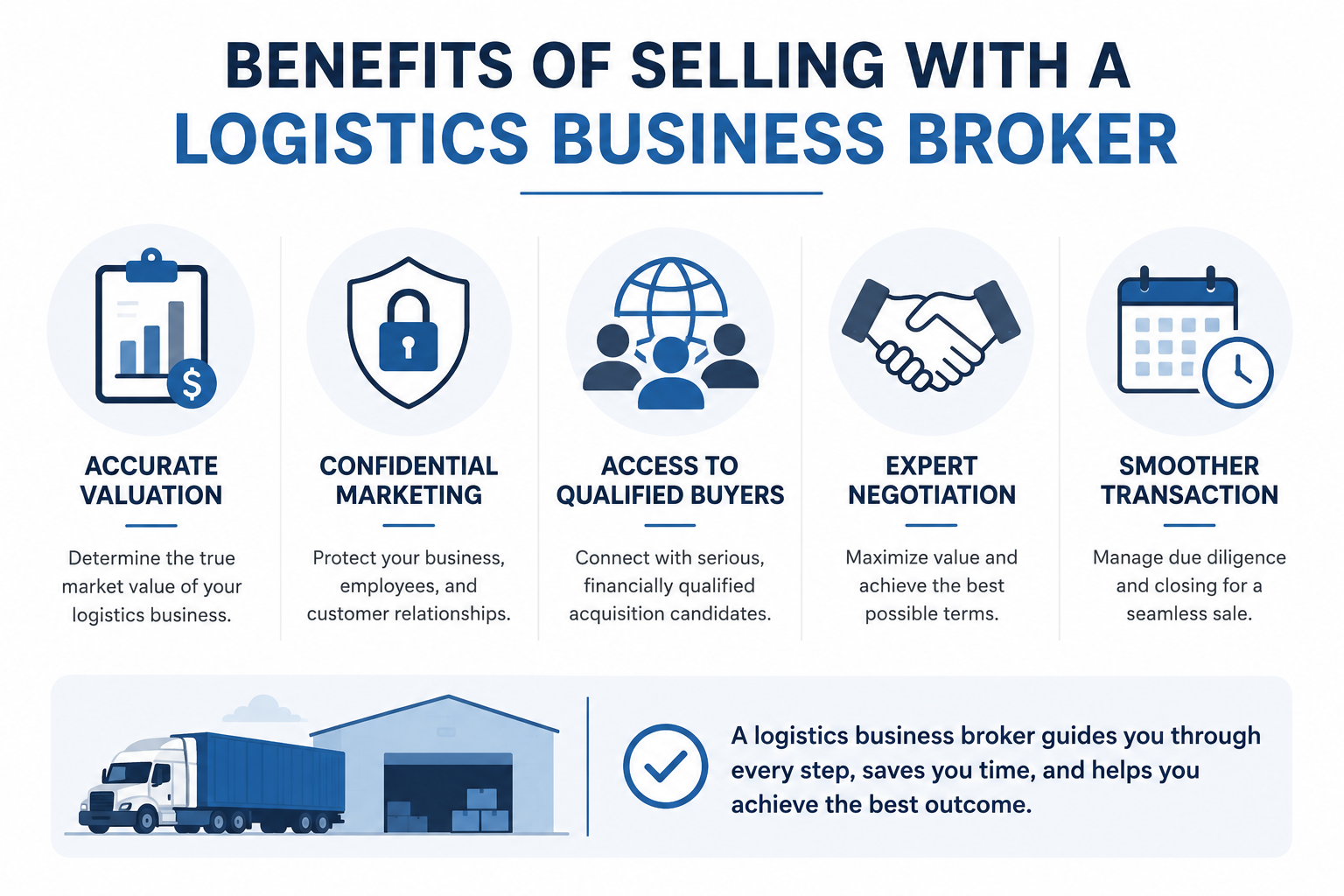
Selling a logistics business is a complex process that requires industry knowledge, confidentiality, and a clear understanding of what buyers are looking for. A logistics business broker helps business owners navigate the sale process while protecting the value they have built.
A specialized broker can provide guidance with:
- Determining an accurate logistics business valuation
- Preparing the company for the market
- Identifying qualified buyers
- Maintaining confidentiality throughout the process
- Negotiating offers and managing the transaction
Because logistics companies have unique operational, financial, and customer considerations, working with a broker who understands the industry can help position your business correctly and improve the chances of a successful sale.
Selling a Logistics Business Through a Broker: What to Expect
Understanding how to sell a logistics business becomes much easier with the right guidance. A business broker helps manage each stage of the transaction, from initial preparation through closing.
The process typically includes:
1. Business Evaluation and Valuation: The broker reviews your company’s financial performance, operations, assets, and growth potential to determine a realistic market value.
2. Preparing the Business for Sale: The broker helps identify areas that may improve buyer interest, including financial organization, operational improvements, and reducing owner dependency.
3. Confidential Marketing to Buyers: A broker creates a strategy to market the business while protecting sensitive information about customers, employees, and operations.
4. Buyer Screening and Negotiations: Qualified buyers are evaluated to ensure they have the ability and interest to complete the acquisition. The broker helps manage discussions, offers, and negotiations.
5. Due Diligence and Closing Support: The broker assists throughout the buyer review process, helping organize documentation and keep the transaction moving toward completion.
Maximize the Value of Your Logistics Business with Buy & Sell Logistics
When you are considering selling a logistics company, partnering with an experienced team can make a significant difference. Buy & Sell Logistics specializes in helping owners navigate the complexities of selling logistics businesses, including trucking companies, freight brokerages, transportation companies, and other logistics-related operations.
With industry-specific knowledge, Buy & Sell Logistics helps business owners understand their logistics business valuation, prepare their company for buyers, maintain confidentiality, and connect with qualified acquisition opportunities.
If you are ready to explore how to sell a logistics business, working with Buy & Sell Logistics can help you create a strategic exit plan, maximize your company’s value, and confidently move through each step of the sale process.
Contact us today for a free logistics business valuation!