Thinking about financing for logistics business acquisitions? Purchasing an established logistics business can be an excellent opportunity for entrepreneurs, investors, and existing transportation company owners looking to expand. From trucking companies and freight brokerages to third-party logistics providers (3PLs) and warehousing operations, the logistics industry offers opportunities to acquire businesses with established customers, recurring revenue, experienced employees, and existing infrastructure.
However, financing an acquisition is often one of the biggest challenges buyers face. Fortunately, the Small Business Administration (SBA) offers financing programs that may make purchasing an established logistics company more accessible. Understanding how SBA financing works, what lenders evaluate, and how to prepare for the acquisition process can help buyers move forward with greater confidence.
What Is SBA Financing for Logistics Business Acquisitions?
The SBA does not typically lend money directly to business buyers. Instead, it provides government-backed guarantees to participating lenders, reducing some of the risk associated with qualifying small business loans.
One of the most commonly used options for acquiring an existing business is the SBA 7(a) loan program. This program allows qualified buyers to finance eligible business acquisitions, including complete or partial changes in ownership. The SBA 7(a) program offers loans of up to $5 million. Depending on the transaction, financing may cover the purchase of the business, equipment, certain eligible expenses, and working capital.
For buyers considering SBA financing for logistics business acquisitions, this flexibility can be particularly valuable when purchasing a logistics company that requires both acquisition capital and additional funds to support ongoing operations.
Why SBA Loans Can Be a Good Fit for Logistics Business Buyers
Logistics businesses often have significant operating assets and established revenue streams. However, purchasing one may require more capital than an individual buyer wants to contribute entirely out of pocket.
SBA financing can help bridge that gap. Some of the potential advantages include:
- Financing business acquisitions: Qualified buyers may use SBA 7(a) financing to purchase an existing trucking company, freight brokerage, 3PL, or other eligible logistics operation.
- Lower upfront capital requirements: SBA-backed acquisition financing may allow qualified buyers to complete a transaction without funding the entire purchase price themselves. Required equity contributions depend on current SBA guidelines and lender underwriting.
- Working capital opportunities: Eligible loan proceeds may provide working capital to support payroll, operating expenses, and other business needs.
- Equipment financing: Depending on the transaction and loan structure, eligible equipment purchases may be included in the financing.
- Flexible acquisition opportunities: SBA 7(a) loans can support qualifying complete or partial ownership changes.
For buyers who want to enter the transportation industry or expand an existing operation, these financing options can make acquiring an established company a more attainable goal.
What Types of Logistics Businesses Can Be Acquired with SBA Financing?
SBA financing may be available for a variety of eligible logistics and transportation businesses. The key is whether the business meets SBA size, industry, operating, and other eligibility requirements. Examples of businesses buyers may consider include:
- Trucking Companies: Established trucking operations may offer existing customer relationships, freight contracts, equipment, drivers, and established routes.
- Freight Brokerages: Buyers may be interested in acquiring freight brokerage companies with established shipper relationships, carrier networks, and repeat business.
- Third-Party Logistics Providers (3PLs): These companies coordinate transportation, warehousing, distribution, and other supply chain services. Established 3PLs can provide buyers with an existing customer base and operating infrastructure.
- Warehousing and Distribution Businesses: Companies providing storage, fulfillment, inventory management, and distribution services may offer opportunities for buyers looking to enter or expand within the supply chain sector.
- Last-Mile Delivery Companies: Established delivery operations may appeal to buyers interested in regional distribution, contracted delivery routes, and e-commerce fulfillment.
Each acquisition must be evaluated individually. Not every business or transaction will qualify, and lenders will assess the company’s financial performance, ownership structure, industry eligibility, and ability to repay the loan.
Qualifications when Financing for Logistics Business Acquisition
When evaluating an SBA-backed acquisition loan, lenders generally focus on the buyer’s qualifications, the business’s financial performance, and the overall strength of the transaction.Several factors are especially important when purchasing a logistics company.
1. Historical Financial Performance
Lenders want to see that the business generates sufficient cash flow to support its ongoing expenses and proposed loan payments. Financial statements, tax returns, revenue history, and profitability are important parts of the evaluation.
2. Consistent Customer Relationships
A logistics company’s value often depends on its customer base and recurring business. Established contracts, long-term relationships, and customer diversification can strengthen the acquisition opportunity.
3. Equipment and Operating Assets
For trucking companies, lenders may review fleet size, vehicle condition, maintenance records, equipment values, and outstanding debt. Other logistics businesses may be evaluated based on warehouse facilities, technology, equipment, and operational infrastructure.
4. Buyer’s Experience and Qualifications
Previous business ownership, management experience, financial knowledge, and familiarity with the transportation industry may help demonstrate that the buyer can successfully operate the acquired company.
5. Purchase Price and Business Valuation
Lenders need to establish that the proposed purchase price is supported by an appropriate business valuation. A thorough evaluation helps determine whether the transaction is financially reasonable and supports the requested financing.
How Much Money Does a Buyer Need Down?
One of the most common questions buyers ask about SBA financing for logistics business acquisition is how much money they need to contribute toward a business acquisition.
The required equity injection depends on the transaction, applicable SBA requirements, and the participating lender’s underwriting standards. A buyer’s available cash, financing structure, and any qualifying seller financing may also influence how a transaction is structured.
Buyers should not assume that the entire purchase price can be financed. They should discuss the required down payment, closing costs, working capital needs, and other project expenses with an SBA-approved lender early in the process.
Having sufficient funds available and understanding the financial commitment before making an offer can help prevent delays and improve the likelihood of completing a successful acquisition.
Steps to SBA Financing for Logistics Business Purchase
Although every acquisition is different, the process generally follows several important steps:
- Identify the right business: Determine which type of logistics company fits your financial resources, industry experience, and acquisition goals.
- Review the financials: Evaluate historical revenue, profitability, cash flow, customer concentration, equipment, and outstanding liabilities.
- Establish business value: Work with an experienced business broker to understand the company’s market value and whether the asking price is reasonable.
- Explore financing options: Speak with SBA lenders to discuss eligibility, required equity, loan structure, and documentation.
- Submit an offer: Once the opportunity and financing approach are established, negotiate the purchase terms and move toward a letter of intent or purchase agreement.
- Complete due diligence: Review financial records, customer agreements, equipment, insurance, operating licenses, regulatory compliance, and other important business information.
- Secure financing and close: Complete the lender’s underwriting and approval process, satisfy closing conditions, and finalize the acquisition.
Preparation is essential. Buyers who understand their financing options and have a clear acquisition strategy are often better positioned to navigate the process.
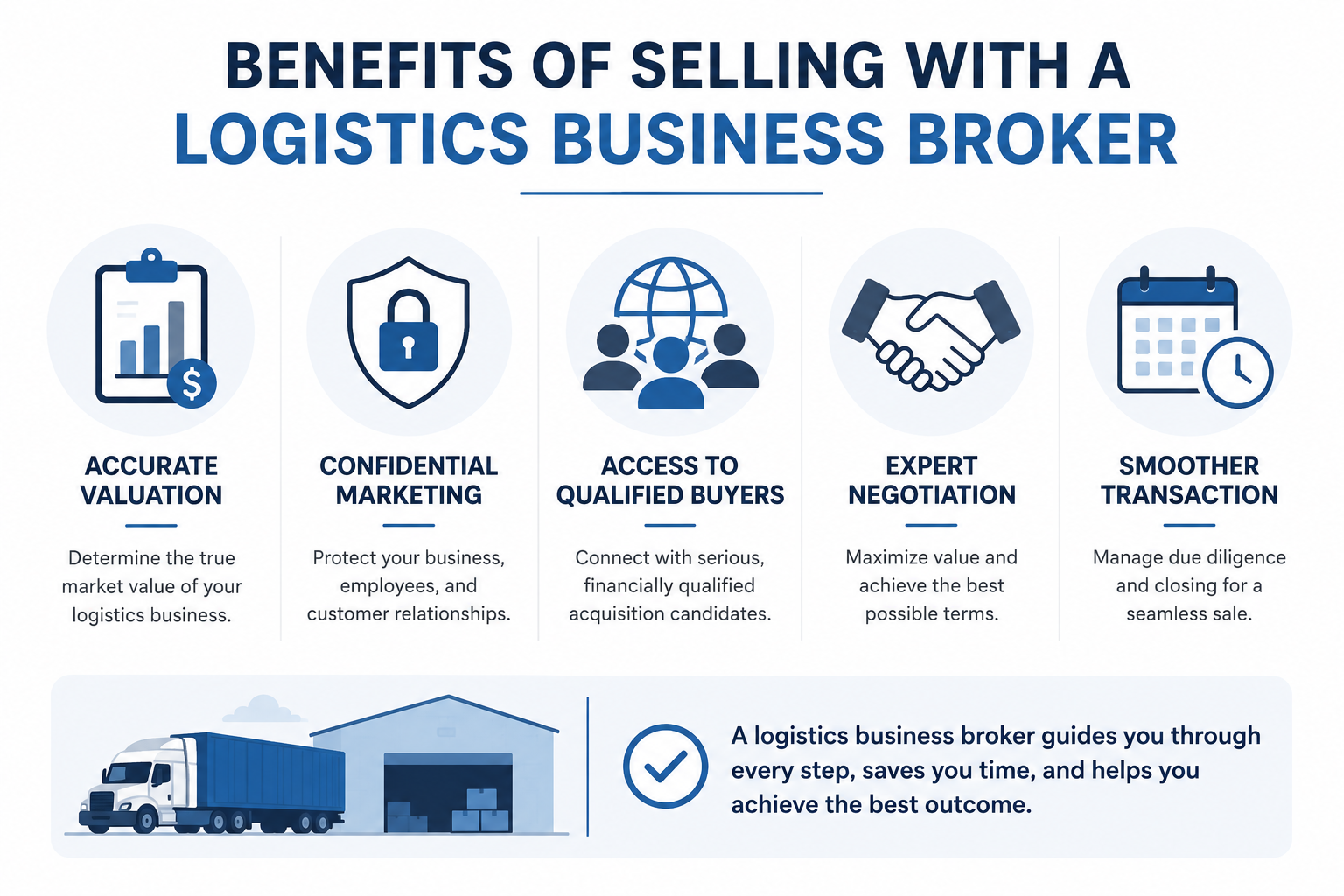
Why Work with a Business Broker When Buying a Logistics Company?
Finding the right logistics business involves much more than identifying a company for sale. Buyers must carefully evaluate its financial performance, operational structure, customer relationships, growth opportunities, and overall market value to determine whether it is the right investment.
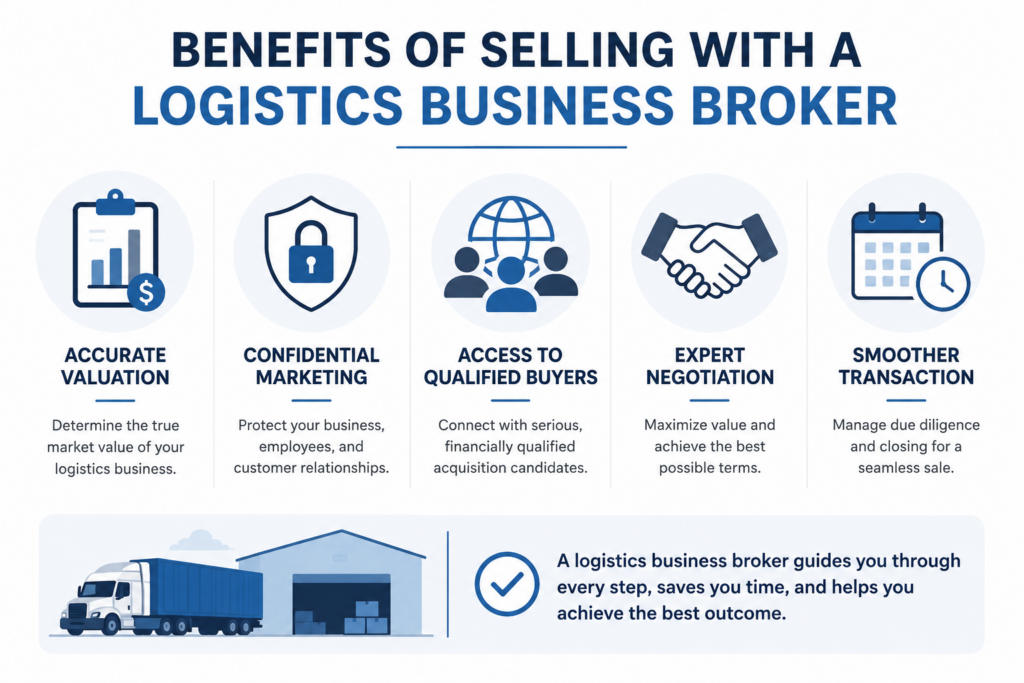
An experienced business broker can walk you through every step when buying a business. They can also simplify this process by helping buyers identify suitable acquisition opportunities, assess business value, communicate with sellers, and navigate negotiations from initial interest through closing.
Working with a brokerage that specializes in transportation and logistics also provides valuable industry insight. Factors such as customer contracts, fleet condition, recurring revenue, management structure, and market demand can all influence a company’s value and long-term potential.
With the right guidance, buyers can make more informed acquisition decisions, better understand the opportunities and risks involved, and move forward with greater confidence.
Final Thoughts: Financing Your Next Logistics Business Acquisition
SBA financing for logistics business purchases can be a valuable resource for qualified buyers interested in purchasing an established logistics or transportation company. With the ability to finance eligible ownership changes, equipment, and working capital, the SBA 7(a) program offers opportunities for buyers who want to enter the industry or expand their existing operations.
The key is finding the right business, understanding its value, preparing financially, and working with qualified lending and brokerage professionals.
Ready to Explore Logistics Business Acquisition Opportunities?
At Buy & Sell Logistics, Lawrence & Associates specializes in helping buyers and sellers navigate the purchase and sale of logistics and transportation businesses. Whether you are interested in acquiring a trucking company, freight brokerage, 3PL, or another transportation-related business, our team can help you explore opportunities and navigate the acquisition process.
Visit BuyAndSellLogistics.com to learn more about available opportunities and our business brokerage services. We can also connect you with options when obtaining financing for logistics business deals. Contact our team today to discuss your acquisition goals and take the next step toward owning a logistics business.
Important SBA Financing Disclaimer
SBA loan programs, eligibility requirements, interest rates, equity injection requirements, and lending guidelines are subject to change. As of October 1, 2026, SBA 7(a) business acquisition loans are governed by the updated SOP 50 10 8.1, which includes revised requirements for changes of ownership. The maximum SBA 7(a) loan amount is currently $5 million.
Actual financing approval, loan terms, required buyer contributions, and eligible uses of proceeds depend on SBA guidelines and individual lender underwriting. Buyers should consult an SBA-approved lender to verify current requirements and determine their financing eligibility.
This article is intended for general informational purposes only and does not constitute financial, legal, or lending advice.