Sell Logistics

Selling a Business: 5 Mistakes Smart Owners Plan to Avoid

Selling a business can be one of the biggest financial decisions a business owner will ever make. Whether you are preparing for retirement, pursuing a new opportunity, or simply ready for your next chapter, selling a business requires careful planning, preparation, and a clear understanding of the process.

Unfortunately, many business owners make avoidable mistakes when they decide to sell. These mistakes can affect the value of the company, reduce buyer interest, create unnecessary delays, or make negotiations more difficult.

One of the most effective ways to avoid these problems is to work with an experienced business broker. A professional broker can help business owners prepare their company for sale, determine an appropriate asking price, find qualified buyers, manage negotiations, and guide the transaction from start to finish.

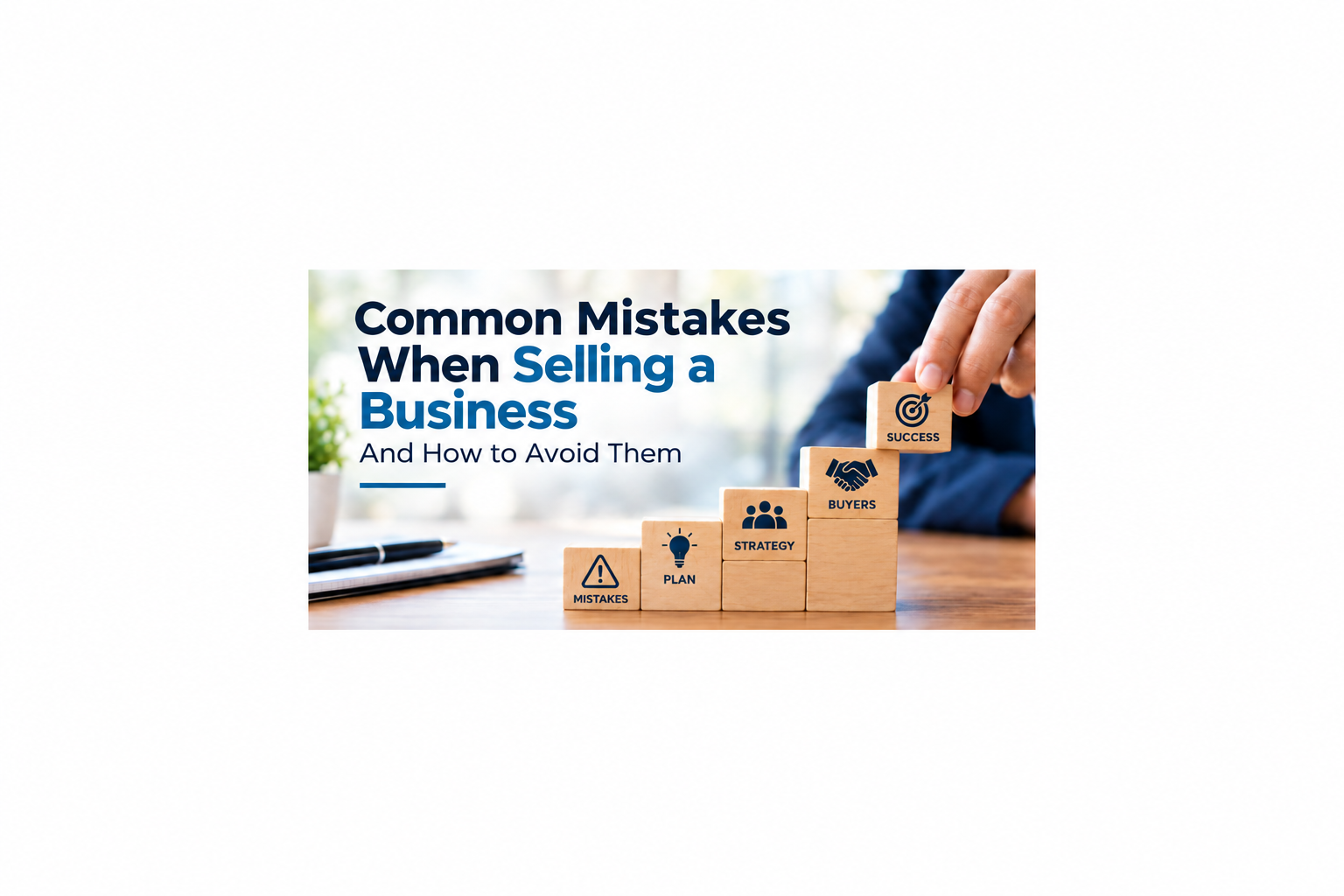
Here are five common mistakes to avoid when selling a business and how working with a professional business broker can help.

1. Waiting Until You Are Ready to Sell to Prepare

One of the most common mistakes when selling a business is waiting until the owner has already decided to sell before preparing the company for the market.

Buyers typically want to see organized financial records, consistent performance, efficient operations, strong customer relationships, and a business that can continue operating successfully after the current owner exits.

If your financial records are disorganized or the business depends heavily on you personally, it can make the company more difficult to sell.

How to Avoid It

Start preparing well before you plan to list the business for sale. Review your financial statements, organize important documents, identify operational weaknesses, and look for ways to improve the company’s overall performance.

A business broker can provide an outside perspective and help identify areas that may need attention before the business is marketed to buyers. This preparation can make the company more attractive and help create a smoother sale process.

2. Pricing the Business Based on Emotion

Business owners naturally have an emotional connection to the company they built. Years of hard work, long hours, relationships, and personal investment can make it difficult to determine what the business is actually worth.

One mistake is setting the asking price based on what the owner needs to retire, how much money they have invested, or what they believe the business should be worth.

Buyers, however, generally evaluate a business based on financial performance, cash flow, assets, growth opportunities, market conditions, and other measurable factors.

How to Avoid It

A professional business valuation can provide a more objective starting point for determining the potential market value of the company.

An experienced business broker can analyze the company’s financial performance and market conditions while helping the owner understand how buyers may view the opportunity. The goal is not simply to choose the highest possible asking price. It is to establish a price and deal structure that can attract qualified buyers while reflecting the company’s underlying value.

3. Trying to Sell the Business Without Professional Help

Some owners assume they can save money by selling their business themselves. While a private sale is possible, the process can involve valuation, marketing, confidentiality, buyer qualification, negotiations, due diligence, contracts, financing considerations, and closing requirements.

Handling all of these responsibilities while continuing to operate the business can quickly become overwhelming.

There is also the challenge of finding qualified buyers. Advertising that a business is for sale publicly can potentially alert employees, customers, competitors, or suppliers before the owner is ready to make an announcement.

How to Avoid It

Consider hiring a professional business broker who understands the business-for-sale market.

A broker can help develop a marketing strategy, identify potential buyers, maintain confidentiality, coordinate communications, and manage the various stages of the transaction. This allows the owner to remain focused on running the company while the broker handles much of the sale process.

For many owners, professional guidance can also help prevent costly mistakes during negotiations.

4. Focusing Only on the Asking Price

Another common mistake when selling a business is focusing exclusively on the purchase price.

The highest offer is not necessarily the only factor that matters. The structure of the transaction can be just as important as the headline purchase price.

For example, offers can differ in areas such as cash at closing, seller financing, earn-outs, contingencies, transition requirements, and the timing of the transaction.

How to Avoid It

Evaluate the entire offer rather than looking only at the purchase price.

A business broker can help explain the differences between offers and provide perspective during negotiations. Because brokers regularly work with buyers and sellers, they can help owners understand how deal terms may affect the overall transaction.

Having professional representation can also give the seller someone to help manage negotiations objectively, rather than making decisions based solely on emotion or pressure.

5. Neglecting Due Diligence and the Closing Process

Getting an offer is an exciting milestone, but it does not mean the sale is complete.

After an offer is accepted, buyers typically conduct due diligence. They may review financial records, contracts, leases, employees, customer relationships, equipment, legal matters, and other aspects of the business.

If important information is missing or inconsistencies appear during due diligence, the transaction can be delayed or renegotiated.

How to Avoid It

Prepare for due diligence before the business goes to market.

Work with your professional advisors and business broker to organize financial statements, tax returns, contracts, licenses, leases, employee information, and other relevant documentation.

A business broker can help coordinate the process between the seller, buyer, attorneys, accountants, lenders, and other professionals involved in the transaction. This communication can help keep the sale moving and reduce surprises near closing.

Why Hire a Professional Business Broker When Selling a Business?

Selling a business involves much more than putting a price on a company and finding someone willing to buy it. Owners need to understand valuation, marketing, confidentiality, buyer qualification, negotiations, due diligence, and transaction structure.

A professional business broker can serve as a guide throughout the process. From determining how to prepare a business for sale to helping negotiate with qualified buyers, a broker can provide experience and perspective that can be difficult for an owner to manage alone while simultaneously running the company.

If you are thinking, “I want to sell my business,” starting the planning process early can make a significant difference. Even if you are not ready to put the business on the market today, speaking with a business broker can help you understand what steps you can take now to prepare for a future sale.

Learn About Selling a Business with Buy & Sell Logistics

If you are ready to sell a business in the logistics, transportation, trucking, freight, or related industries, Buy & Sell Logistics can help guide you through the process. As a specialized business brokerage resource, Buy & Sell Logistics understands the unique considerations involved in selling logistics and transportation companies. Their experienced team can help business owners navigate valuation, marketing, buyer identification, negotiations, and the transaction process.

For business owners considering selling a business, working with a knowledgeable broker can provide valuable guidance from preparation through closing. If you’re ready to explore your options, contact us today to get a free business valuation!


 

selling a business
September 19, 2026Comments Offbusiness brokers | sell your trucking company | selling a business
How Much Is a Trucking Company Worth in 2026?

For many business owners, one of the most important questions they face is, “How much is my trucking company worth?” In 2026, the market for transportation and logistics businesses remains active, with buyers continuing to seek established companies that offer strong revenue, reliable customer relationships, and growth potential.

Whether you’re planning for retirement, considering an exit strategy, or simply curious about your options, understanding what drives value can help you maximize the price of your business. Working with experienced logistics business brokers can also provide valuable insight into today’s market and help position your company for a successful sale.

Strong Buyer Demand Continues in 2026

Despite changes in freight markets and economic conditions, trucking and logistics companies continue to attract interest from private investors, strategic buyers, and larger transportation companies looking to expand their operations.

Businesses with established customer bases, recurring revenue, and experienced management teams are often viewed as attractive acquisition targets. As a result, many owners are surprised to learn that their companies may be worth significantly more than they expected.

For owners considering whether to sell logistics businesses now or in the future, understanding the factors that influence valuation is essential.

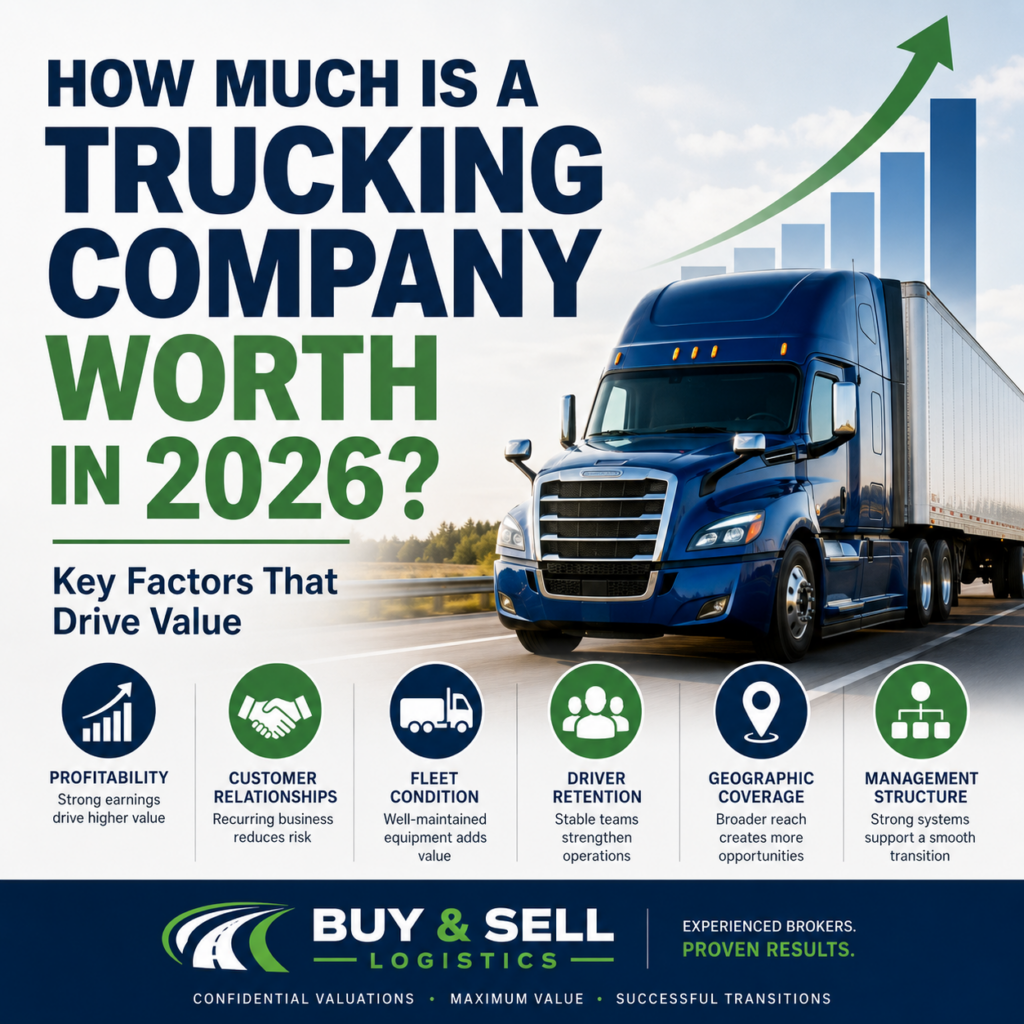
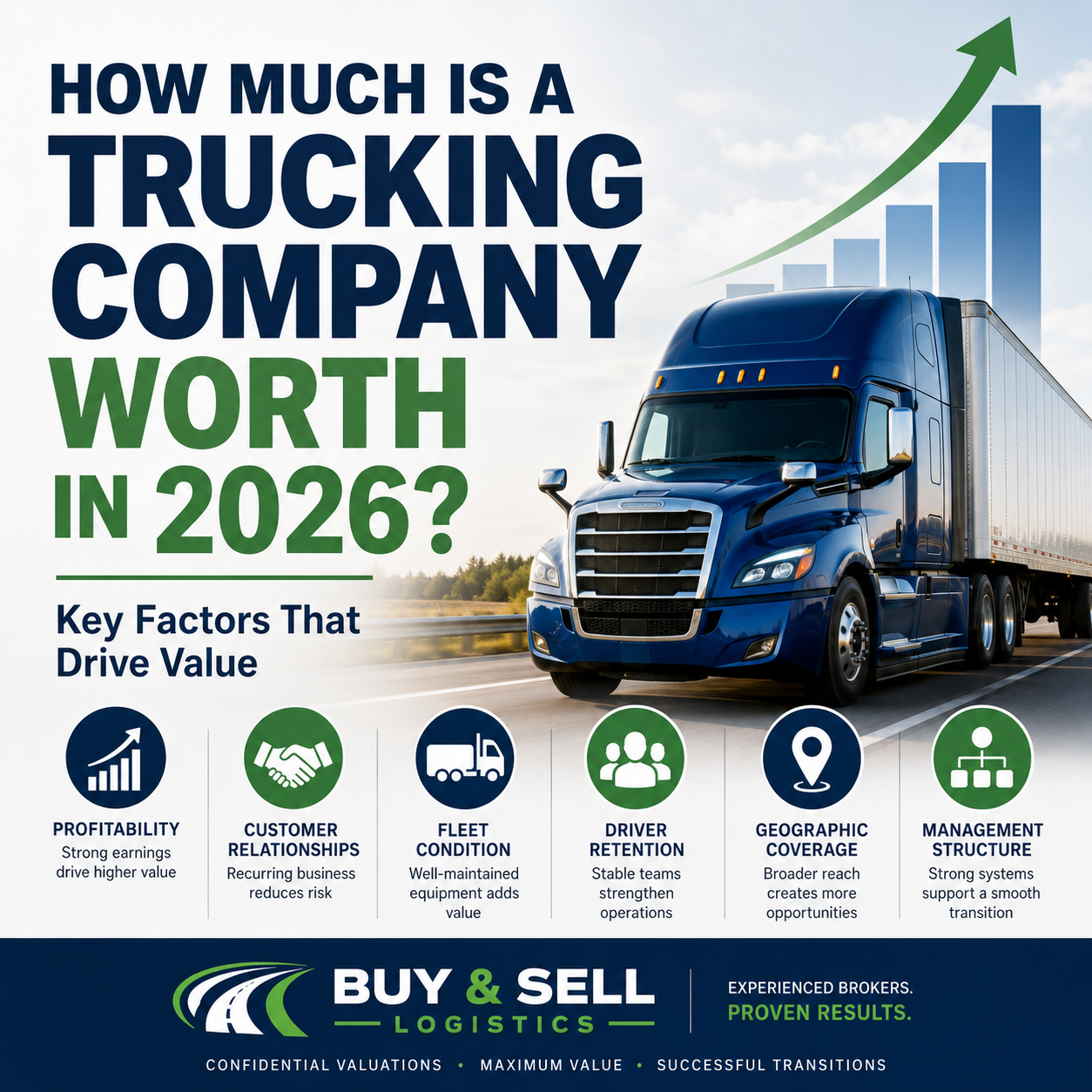
What Determines the Value of a Trucking Company?

No two trucking companies are identical. Several factors influence what buyers are willing to pay.

trucking company worth

Revenue and Profitability

Annual revenue and cash flow are among the most important valuation drivers. Buyers focus heavily on profitability because it indicates the company’s ability to generate future returns.

A trucking company with consistent earnings and strong margins will generally command a higher valuation than a company with fluctuating profits.

Customer Relationships

Long-term customer contracts and recurring business provide stability and reduce risk. Companies that rely heavily on one customer may face lower valuations because of customer concentration concerns.

Diversified customer relationships demonstrate a more sustainable operation and are often viewed favorably by buyers.

Fleet Condition

The age and condition of trucks, trailers, and equipment can significantly affect value.

Buyers evaluate:


    • Maintenance records

    • Average age of vehicles

    • Equipment replacement schedules

    • Safety systems and technology

    • Overall appearance and reliability

Well-maintained fleets often help support higher selling prices.

Driver Retention

One of the biggest challenges in the transportation industry is retaining qualified drivers.

Companies with stable driver teams, low turnover, and strong safety records are generally more attractive to buyers. A dependable workforce reduces operational risk and contributes to overall company value.

Geographic Coverage

Businesses serving multiple states or regions often appeal to strategic buyers seeking expansion opportunities.

Companies with established routes and broad customer reach may command premium valuations compared to businesses operating in a limited geographic area.

Management Structure

Businesses that can operate without the owner’s daily involvement are typically worth more.

When a company depends entirely on the owner, buyers may view the transition as riskier. Developing a management team and documented operating procedures can help increase value and improve marketability.

Common Valuation Multiples in 2026

Many trucking companies are valued using a multiple of Seller’s Discretionary Earnings (SDE) or EBITDA.

Although every business is different, typical valuation ranges may include:


    • Smaller owner-operated companies: 2 to 3 times SDE

    • Established regional carriers: 3 to 5 times EBITDA

    • Larger operations with strong growth potential: 5 to 7 times EBITDA or higher

Factors such as profitability, customer diversification, equipment quality, and growth opportunities all influence where a company falls within these ranges.

Because market conditions change, owners should work with an experienced business broker to obtain a current and realistic estimate of value.

Ways to Increase the Value of Your Trucking Company

Owners who prepare in advance often achieve higher selling prices. Several strategies can improve valuation before going to market.

Strengthen Financial Records

Clean and accurate financial statements make it easier for buyers to evaluate the business. Organized records increase buyer confidence and help support higher offers.

Diversify Customers

Reducing dependence on a small number of customers lowers risk and improves overall attractiveness.

Build a Strong Management Team

Companies with experienced dispatchers, operations managers, and administrative staff often transition more smoothly to new ownership.

Maintain Equipment

Keeping trucks and trailers in good condition demonstrates operational discipline and minimizes concerns during due diligence.

Develop Growth Opportunities

Buyers frequently pay premiums for companies with expansion potential. New service offerings, additional lanes, and untapped geographic markets can all enhance value.

Why Market Timing Matters

Many owners wait until they are ready to retire before exploring their options. However, the best time to evaluate your company may be years before an actual sale.

Understanding your company’s current value allows you to identify opportunities for improvement and implement strategies that can maximize future proceeds.

Even if you are not planning to sell logistics companies immediately, obtaining a confidential valuation can provide important insights into your financial future.

The Importance of Working with a Business Broker

Selling a trucking company involves much more than simply finding a buyer. Confidentiality, valuation, marketing, negotiations, and due diligence all require specialized expertise.

An experienced business broker can help owners:


    • Determine fair market value

    • Identify qualified buyers

    • Maintain confidentiality

    • Prepare financial information

    • Negotiate favorable terms

    • Manage the transaction process from start to finish

Professional guidance often results in smoother transactions and higher overall selling prices.

Why Owners Turn to Logistics Business Brokers

General brokers may understand the sales process, but logistics business brokers possess industry-specific knowledge that can make a significant difference.

They understand:


    • Freight markets

    • Equipment values

    • Industry trends

    • Operational challenges

    • Buyer expectations

    • Transportation regulations

This expertise helps position companies effectively and attract buyers who understand the value of a quality transportation operation.

Ready to Sell Your Logistics Business?

The answer to “How much is a trucking company worth in 2026?” depends on many factors, including profitability, customer relationships, fleet condition, management structure, and growth opportunities.

For many owners, the current market presents attractive opportunities. Whether you are actively planning an exit or simply beginning to explore your options, understanding your company’s value is an important first step.

If you are considering how to sell logistics businesses successfully, working with experienced logistics business brokers can help you maximize value and navigate the process with confidence. An experienced business broker can provide a confidential assessment and guide you through every stage of the transaction, helping you achieve the best possible outcome for selling logistics businesses nationwide.

Maximized Trucking Company Worth with Help from Top Logistics Business Brokers

If you’re thinking about selling now or planning for a future exit, the first step is understanding the value of your business.

At Buy & Sell Logistics, our experienced business brokers specialize in helping transportation, trucking, and logistics company owners maximize value and achieve successful transactions.

We provide confidential, no-obligation business valuations and have the resources and industry expertise to guide you through every stage of the selling process. Whether you’re ready to go to market or simply want to understand your options, our team is here to help.

Contact Buy & Sell Logistics today to schedule a confidential consultation and discover what your trucking company could be worth. Speak with an experienced logistics business broker today!

June 22, 2026Comments Offbusiness brokers | logistics business brokers | sell your trucking company | trucking comany worth | trucking company value